
Recipe history & notes
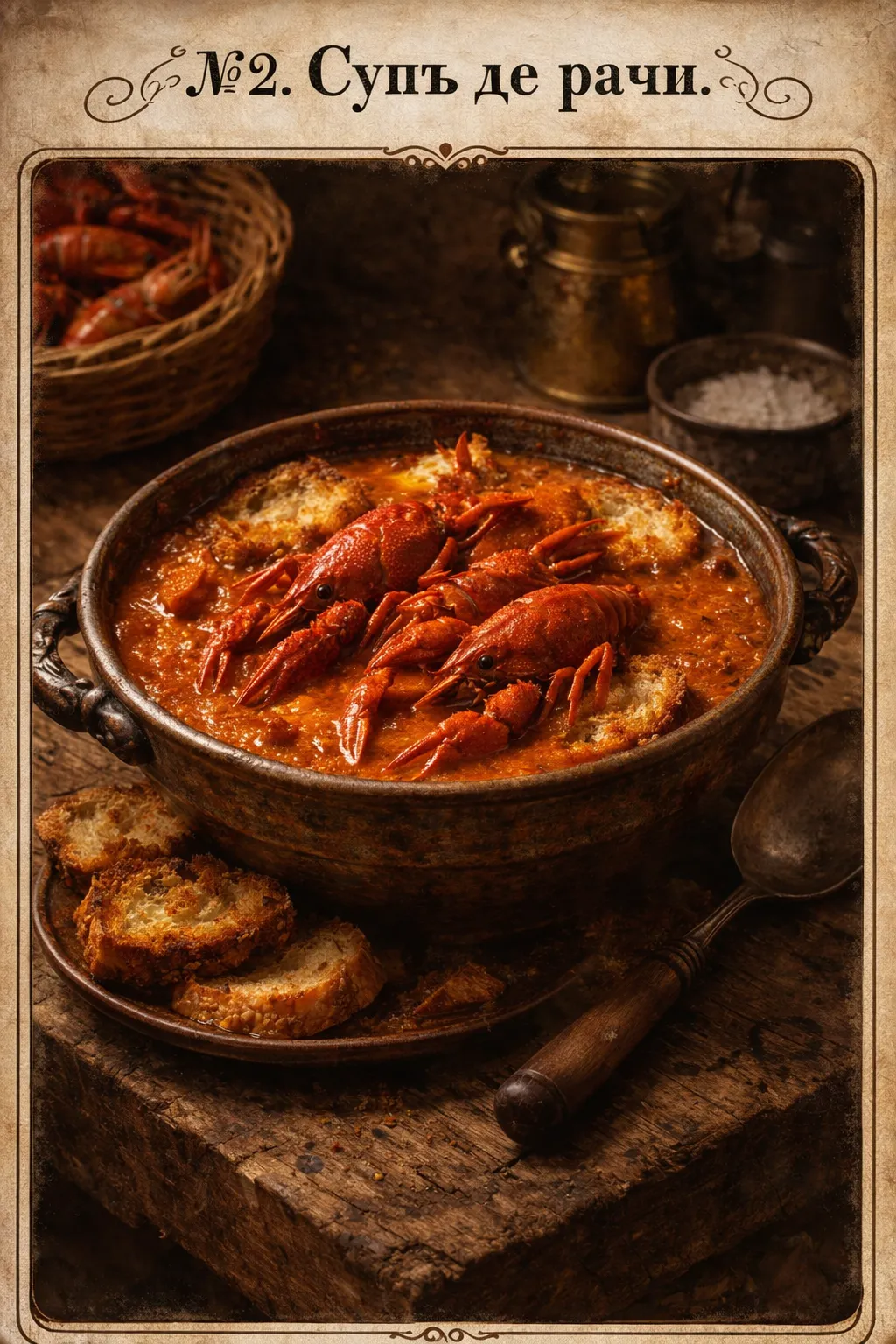
Crayfish Soup is a historical Romanian recipe from 1842, presented with ingredients, preparation, and historical context. This page brings together the available transcription, editorial notes, and the original manuscript image.
Ingredients – Crayfish Soup
- 2 pieces crayfish
- meat broth
- fat
- 1 tablespoon flour
- white loaf
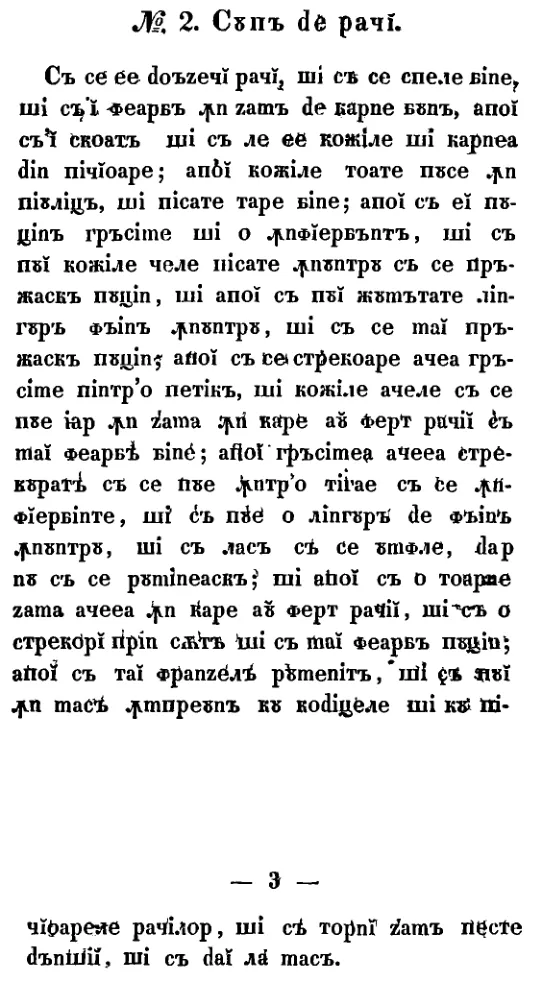
Original manuscript
Digitised facsimile from the 1842 archive.
Historical narrative
# Crayfish Soup (1842)
## Faithful Translation into Modern English
Take twenty crayfish and wash them well, and boil them in good meat broth; then remove them and take off the shells and the meat from the legs.
Then all the shells are placed in a mortar and pounded very well; fat is added and heated, and the pounded shells are put into a pan to fry a little.
After that the inner meat is added and fried a little more; then that fat is strained through cloth, and the shells are returned to the broth in which the crayfish were boiled and boiled again well.
Then the strained fat is heated in a pan and a spoon of flour is added and allowed to thicken, but not to brown; then the broth in which the crayfish were boiled is poured in, strained through a sieve, and boiled a little more.
Finally, toasted slices of white loaf are cut and served together with the tails and legs of the crayfish, and it is brought to the table.
Cook’s advice
# Tips for a Modern Kitchen
These recommendations are not part of the original text.
1. Crayfish
- Use very fresh crayfish, or substitute lobster or langoustine for a similar flavour.
2. Broth
- Prepare a clear chicken or beef stock beforehand.
3. Shell crushing
- Crushing the shells is essential for flavour extraction; a strong blender may replace the mortar.
4. Straining
- For an especially smooth soup, use a very fine sieve or double-layer cheesecloth.
5. Serving
- Place the tails and legs of the crayfish in the bowl before pouring the hot soup over them.
Additional notes
# Historical Notes
- The recipe calls for approximately twenty crayfish.
- The type of fat is not specified; historically it could have been butter or lard.
- Thickening with flour suggests a technique similar to a pale roux.
- Repeated straining indicates the intention of a refined, smooth soup.
- Exact quantities of broth are not provided in the original text.